Most of Your Payroll Buys Work About Work. Here Is the Math.
Research shows workers lose 58 percent of their day to coordination instead of output. Here is what that costs a 20 person company, in actual money.
Here is a number that should bother you more than any competitor does.
Asana's Anatomy of Work Global Index surveyed 9,615 knowledge workers across six countries and found that people spend 58 percent of their day on work about work. Chasing status updates. Searching for documents. Sitting in meetings about the work instead of doing the work. Duplicating information that already exists somewhere else. The skilled and strategic work people were actually hired for fits into the 42 percent that remains.
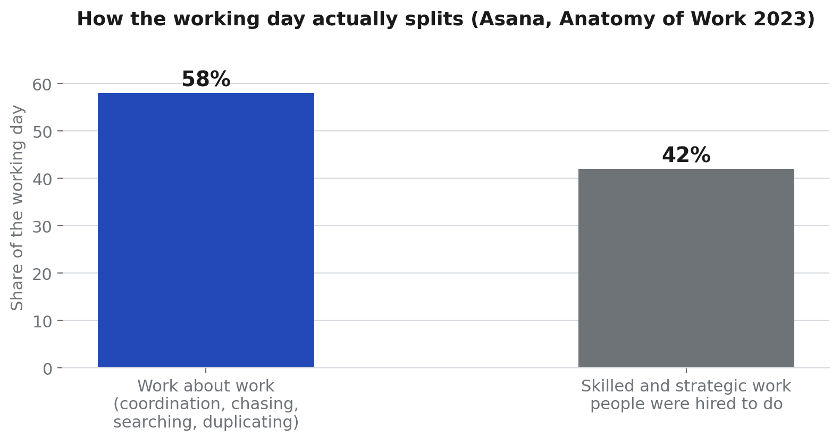
Figure 3. Split of the working day across 9,615 surveyed knowledge workers. Source: Asana, Anatomy of Work Global Index 2023.
Microsoft's own telemetry points the same direction. Its 2023 Work Trend Index, drawn from usage data across Microsoft 365, found that the average employee spends 57 percent of their software time communicating in meetings, email and chat, and only 43 percent creating anything. The same report found that 62 percent of workers say they lose too much of their day searching for information.
Nobody plans it this way. It is what happens by default when a company grows faster than its systems.
Let us put money on it
Take a 20 person company. Average fully loaded cost of 50,000 pounds per person per year. Total payroll, one million pounds.
Now be generous. Assume the research overstates it and coordination overhead eats only 30 percent of the week in your company, not 58. That is still 300,000 pounds a year spent on friction. Not on sales. Not on product. Not on customers. On the internal cost of the company talking to itself.
Most founders will spend months negotiating a supplier contract to save 10,000 pounds while this number sits untouched, because it never appears on any invoice. Friction does not send you a bill. It just quietly takes the margin.
Why it grows as you grow
At five people, coordination is free. Everyone sits in the same room, or the same chat, and everyone knows everything. At twenty people, knowledge splits across tools and heads. The person who knows the client history is not the person running the project. The numbers live in three places. Coordination stops being free and becomes a tax, and the tax rate rises with headcount.
This is the uncomfortable truth of the modern software stack. Every new tool solves a task and adds a seam. And work leaks through seams.
The companies that escape it
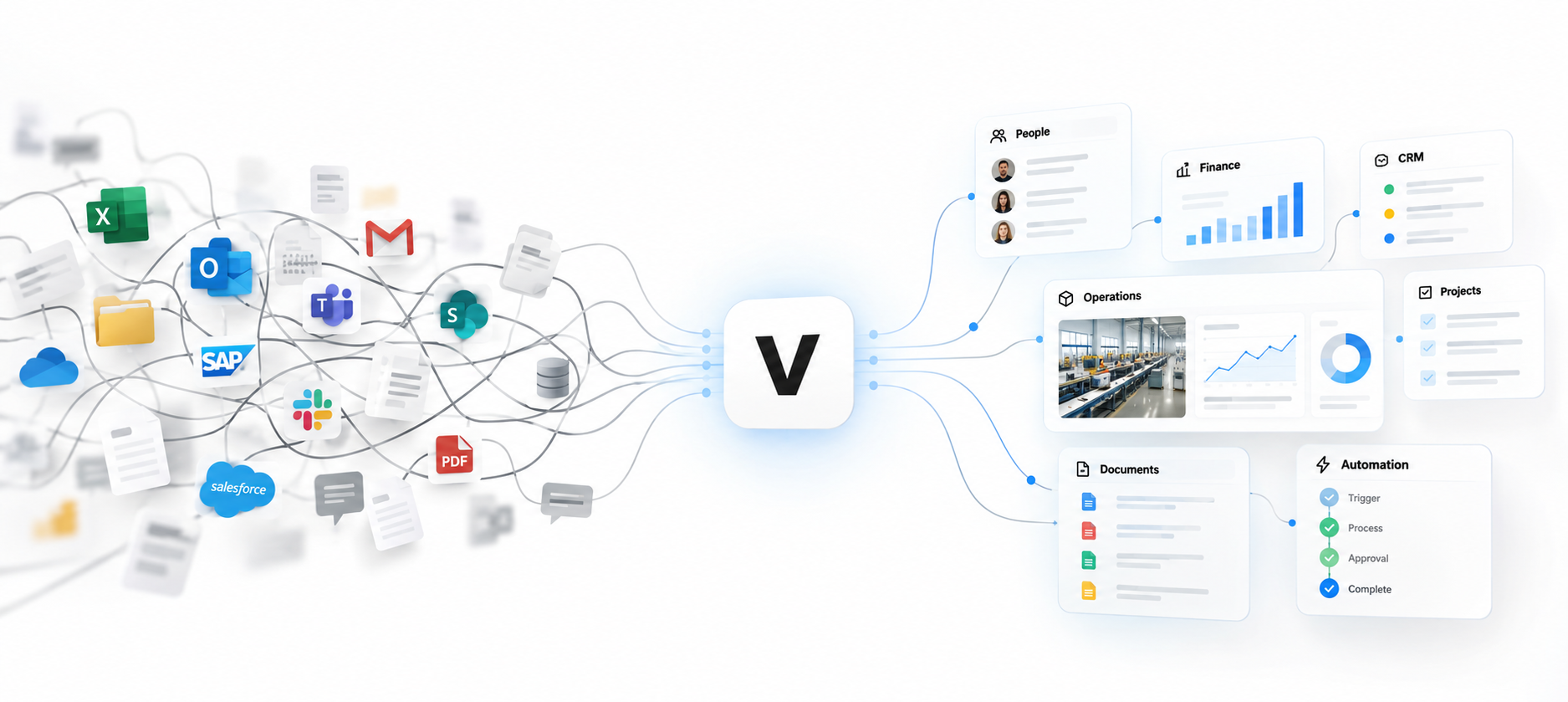
The companies that beat this do not work harder. They change what work is required. They put their operations in one system, so a status update is something you look at, not something you request. They write their processes into the system itself, so the answer to how we do things here does not depend on who you ask. They automate the handoffs, because a handoff a machine can do is a handoff a human should not.
This is the entire idea behind Vokt. One system where you see the business, build your way of working into it, and automate what repeats. The result is not that people do more. It is that more of what they do counts.
The question for your company
You measure revenue per employee. Try estimating output per employee instead. How much of the week actually lands on things a customer would pay for? If the honest answer is about half, you do not have a people problem or a motivation problem. You have an operating problem. And operating problems have operating solutions.
The 300,000 pounds is already being spent this year. The only choice you have is what it buys. If you want it buying output instead of friction, start at vokt.ai.
Sources
Asana, Anatomy of Work Global Index 2023, conducted by GWI across 9,615 knowledge workers in the US, UK, Australia, France, Germany and Japan. https://investors.asana.com/news-releases/news-release-details/asana-anatomy-work-global-index-2023-smart-collaboration-and
Microsoft, Work Trend Index Annual Report 2023, Will AI Fix Work. https://www.microsoft.com/en-us/worklab/work-trend-index/will-ai-fix-work